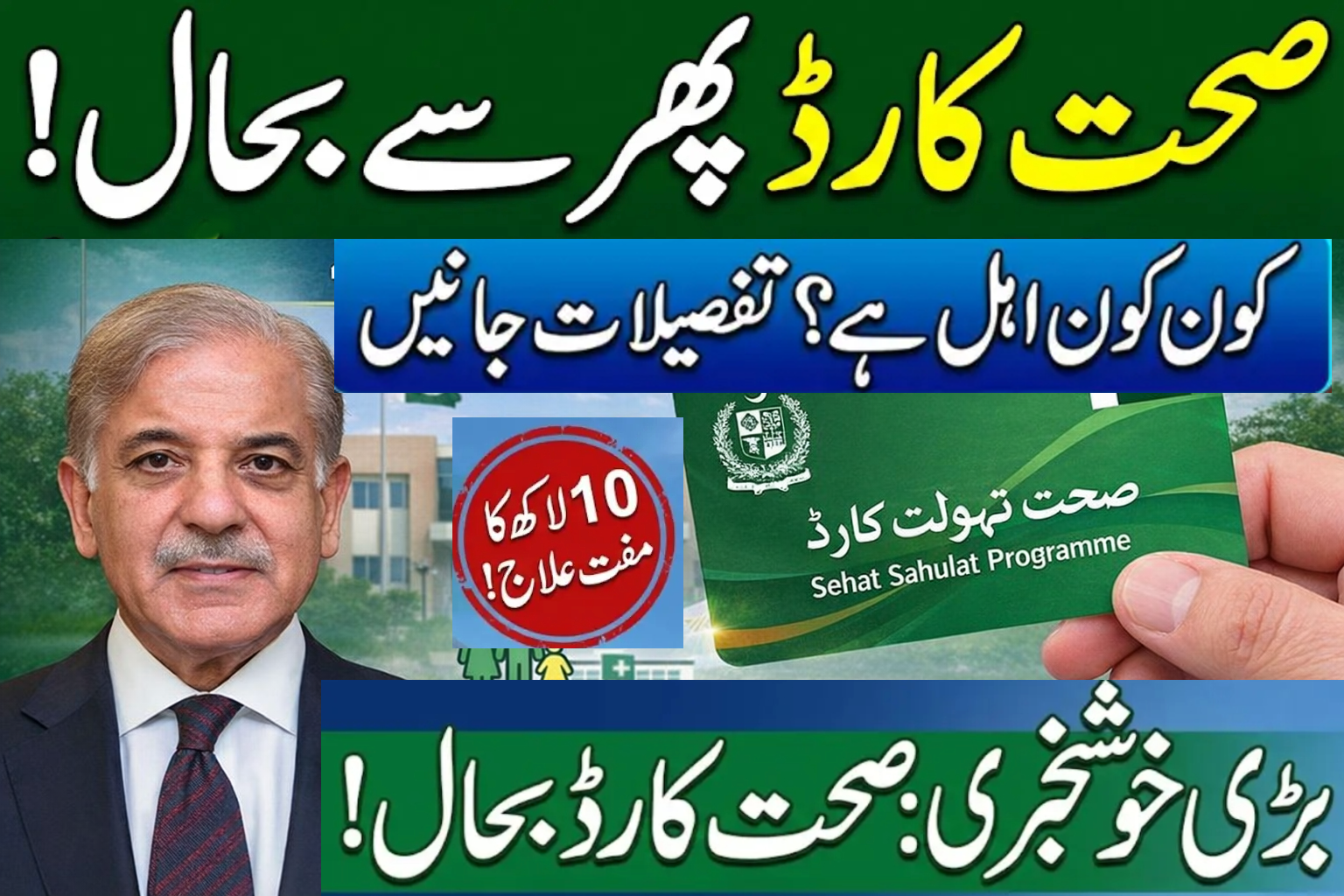

Access to quality healthcare is a fundamental necessity, yet for many families, the cost of medical treatment remains a significant barrier. In a major move to bridge this gap, the Federal Government has announced the reinstatement of the Sehat Sahulat Health Card for 2026. This initiative is set to restore critical health coverage for millions of citizens in Islamabad, Azad Jammu and Kashmir (AJK), and Gilgit-Baltistan (GB).
Starting January 16, 2026, the program will resume services, providing financial protection against high medical costs to over 10 million families. With a revised budget of approximately Rs. 40 billion, the government aims to shift toward modern health insurance models, ensuring that underprivileged households can access top-tier medical facilities without the burden of out-of-pocket expenses.
If you are a resident of these regions, understanding how to apply, what services are covered, and how the reinstatement process works is crucial. This guide covers everything you need to know about the restored Sehat Sahulat Health Card for 2026.
Major Updates on the 2026 Restoration
The decision to reinstate the Sehat Sahulat Card comes as a relief to residents in federal territories who faced disruptions in healthcare access. The restored facility is not just a temporary fix; it is a structured plan designed to remain operational until June 30, 2027.
Key Highlights of the Restoration
The government has approved a revised PC-I for the program, allocating an estimated Rs. 40 billion to ensure smooth operations. This funding is critical for clearing outstanding liabilities to hospitals and service providers, which will be managed through the Public Sector Development Programme.
To facilitate a seamless transition, existing contracts with State Life Insurance Corporation and the National Database and Registration Authority (NADRA) are being extended. This collaboration ensures that the backend infrastructure—ranging from beneficiary verification to claims processing—remains robust and efficient. Unlike previous iterations that involved direct management of hospital services, the 2026 program focuses on “strategic purchasing” and modern health insurance models to improve service delivery efficiency.
Objectives of the Sehat Sahulat Health Card
The primary goal of restoring the health card program is simple yet profound: Universal Health Coverage (UHC). The initiative targets the most vulnerable segments of society, ensuring that financial constraints do not prevent anyone from receiving timely medical treatment.
Beyond immediate financial relief, the program has several strategic objectives:
- Enhancing Efficiency: By adopting insurance-based models, the government aims to streamline healthcare delivery, reducing administrative bottlenecks.
- Promoting Preventive Care: The program encourages timely medical interventions, preventing minor health issues from escalating into critical conditions.
- Strengthening Infrastructure: It fosters better collaboration between public/private hospitals, insurers, and government bodies.
- Regional Equality: The restoration ensures that citizens in AJK and GB have the same healthcare opportunities as those in the capital.
Services Covered Under the Program
One of the most significant aspects of the Sehat Sahulat Card is the comprehensive nature of its coverage. The card is designed to handle both emergency situations and routine medical needs, ensuring holistic care for eligible families.
Inpatient and Specialized Care
The card covers treatments that often drain family savings. Beneficiaries can access free treatment for critical illnesses, including:
- Heart Disease: Coverage for cardiac surgeries, stents, and related procedures.
- Oncology: Comprehensive cancer treatments, including chemotherapy and radiation.
- Nephrology: Dialysis and treatment for kidney failure.
- Surgical Procedures: General surgeries and specialized interventions in recognized hospitals.
Maternal and Child Health
Recognizing the importance of family health, the program places a strong emphasis on maternal and child healthcare. Services include coverage for delivery (C-sections and normal births), pre- and post-natal care, and immunization services to protect the next generation.
Diagnostic and Routine Services
Effective treatment begins with accurate diagnosis. The card covers essential diagnostic tests, laboratory services, and hospital admissions. Whether it is inpatient care or outpatient treatment in recognized hospitals, the financial coverage ensures that families do not have to compromise on the quality of care due to costs.
Who Is Eligible in Islamabad, AJK & GB?
The restoration specifically targets permanent residents of Islamabad Capital Territory, Azad Jammu and Kashmir, and Gilgit-Baltistan. The eligibility criteria are designed to prioritize families who do not have alternative financial safety nets for healthcare.
You are eligible if:
- Residency: You are a permanent resident of Islamabad, AJK, or GB as per your CNIC.
- Insurance Status: Your family does not have alternative private health insurance coverage.
- Registration: You are a citizen registered with NADRA.
The program utilizes NADRA’s database to verify family status and eligibility. If your data is up to date with NADRA, you are likely already included in the system. It is vital to ensure that your family tree is updated in the NADRA database, particularly for new births or marriages, to ensure all family members can avail benefits.
Step-by-Step Registration & Reinstatement Process
For 2026, the government has streamlined the process to make it as accessible as possible. Since the contracts with NADRA and State Life Insurance Corporation have been extended, the existing infrastructure will be utilized to facilitate users.
How to Apply or Renew
Follow these steps to ensure your Sehat Sahulat Card is active:
Step 1: Eligibility Check
Before visiting a center, you can often check your eligibility via SMS services provided by the government (usually by sending your CNIC number to 8500, though citizens should verify the active short code for 2026).
Step 2: Visit a Registration Center
Go to the nearest Sehat Sahulat registration center or a designated empanelled hospital. You can find a list of these centers on the official program website.
Step 3: Documentation
Bring your original NADRA-issued CNIC. If you are the head of the household, ensure you have the necessary documentation proving permanent residence in Islamabad, AJK, or GB.
Step 4: Form Submission
Complete the application or renewal form. If you are already in the database, this step may simply involve verifying your current status.
Step 5: Card Collection and Activation
Once processed, you will receive your health card. In many cases, the CNIC itself acts as the health card. Ensure it is activated for immediate use.
Funding and Financial Management
Sustainability is a core component of the 2026 restoration plan. The government has earmarked Rs. 40 billion to fund the initiative, managed through the Public Sector Development Programme (PSDP).
This financial structure is designed to prevent the issues that plagued the program in the past, such as delayed payments to hospitals which led to service refusal. The plan includes:
- Clearing Liabilities: Immediate payment of outstanding dues to hospitals and service providers to restore trust and service availability.
- Strategic Purchasing: Moving away from standard funding to a model where the government acts as a strategic purchaser of health services, ensuring better value for money.
- Audits and Monitoring: Regular financial audits to ensure transparency and prevent leakage of funds.
Implementation Timeline
The government has rolled out a phased approach to ensure the system is not overwhelmed and that services are restored effectively.
- Phase 1 (January 16, 2026): Official restoration of services in Islamabad, AJK, and GB.
- Phase 2 (January – March 2026): Administrative focus on clearing outstanding liabilities and normalizing payments to hospitals.
- Phase 3 (March – June 2026): Intensive monitoring and evaluation of service delivery to identify and fix teething issues.
- Phase 4 (June 2026): Full program review and confirmation of extension protocols until June 30, 2027.
Common Issues & How to Resolve Them
While the system is designed for efficiency, beneficiaries may encounter technical or administrative hurdles. Being prepared can help resolve these quickly.
Card Activation Delays: If your card is not active despite registration, verify your CNIC details with NADRA. Discrepancies in the family tree are a common cause of delays.
Hospital Refusal: Occasionally, hospital staff may not be updated on the reinstatement. In such cases, contact the designated helpline numbers immediately or visit the local Sehat Sahulat office for intervention.
Data Mismatch: Ensure your permanent address on your CNIC matches the eligible regions (Islamabad, AJK, GB). If you have moved but not updated your CNIC, you may face eligibility issues.
The Shift to Modern Health Insurance Models
Perhaps the most forward-thinking aspect of the 2026 plan is the shift toward modern insurance models. Previously, the government was heavily involved in direct hospital management for these programs. The new approach focuses on Strategic Purchasing.
This means the government purchases health services from public and private providers on behalf of the citizens. This fosters competition among healthcare providers to deliver better quality services to attract patients. It reduces the administrative burden on government hospitals, streamlines claim processing, and ultimately improves patient satisfaction through faster access to treatment.
Frequently Asked Questions (FAQs)
1. What is the Sehat Sahulat Health Card?
The Sehat Sahulat Health Card is a government initiative designed to provide financial protection to families in Islamabad, Azad Jammu and Kashmir (AJK), and Gilgit-Baltistan (GB) by offering access to quality healthcare services. It covers a wide range of medical expenses, including hospitalizations, critical illness treatments, and diagnostic procedures.
2. When will the restoration take effect?
The facility will be restored starting January 16, 2026, and will remain operational until June 30, 2027. Services will resume in a phased manner to ensure smooth implementation.
3. Who is eligible for the health card?
Eligibility extends to all permanent residents of Islamabad, AJK, and GB who are registered with NADRA. The program specifically targets low- and middle-income families who lack private health insurance to ensure equitable healthcare access.
4. What services are covered under the program?
The card provides comprehensive healthcare services, including but not limited to:
- Emergency and trauma care.
- Critical illness treatment (e.g., heart disease, cancer).
- Hospitalizations and surgeries.
- Maternal and child healthcare.
- Diagnostic tests and medicines.
5. How will the program be financed?
The government has allocated Rs. 40 billion through the Public Sector Development Programme to fund the initiative. Outstanding liabilities will be cleared, and contracts with key insurance providers like State Life Insurance Corporation will be extended to maintain service continuity.
6. What is the registration process?
To register for or renew the Sehat Sahulat Card:
- Visit the nearest Sehat Sahulat registration center or hospital.
- Present a NADRA-issued CNIC and proof of residence for verification.
- Fill out the application or renewal form.
- Collect and activate the card for immediate use.
7. How can I resolve issues related to card activation or service access?
Citizens facing issues such as delays in activation or record discrepancies can:
- Verify their details with NADRA.
- Contact the local Sehat Sahulat offices or helpline.
- Ensure that hospital staff updates patient records properly.
8. What is the program’s focus moving forward?
The program will now emphasize modern health insurance models and strategic purchasing rather than direct hospital management. This shift aims to improve efficiency, service quality, and transparency in healthcare delivery.
By securing healthcare for millions in 2026, the Sehat Sahulat Health Card is not just a policy document it is a lifeline. Eligible citizens are encouraged to check their status and apply immediately to secure their family’s health future.